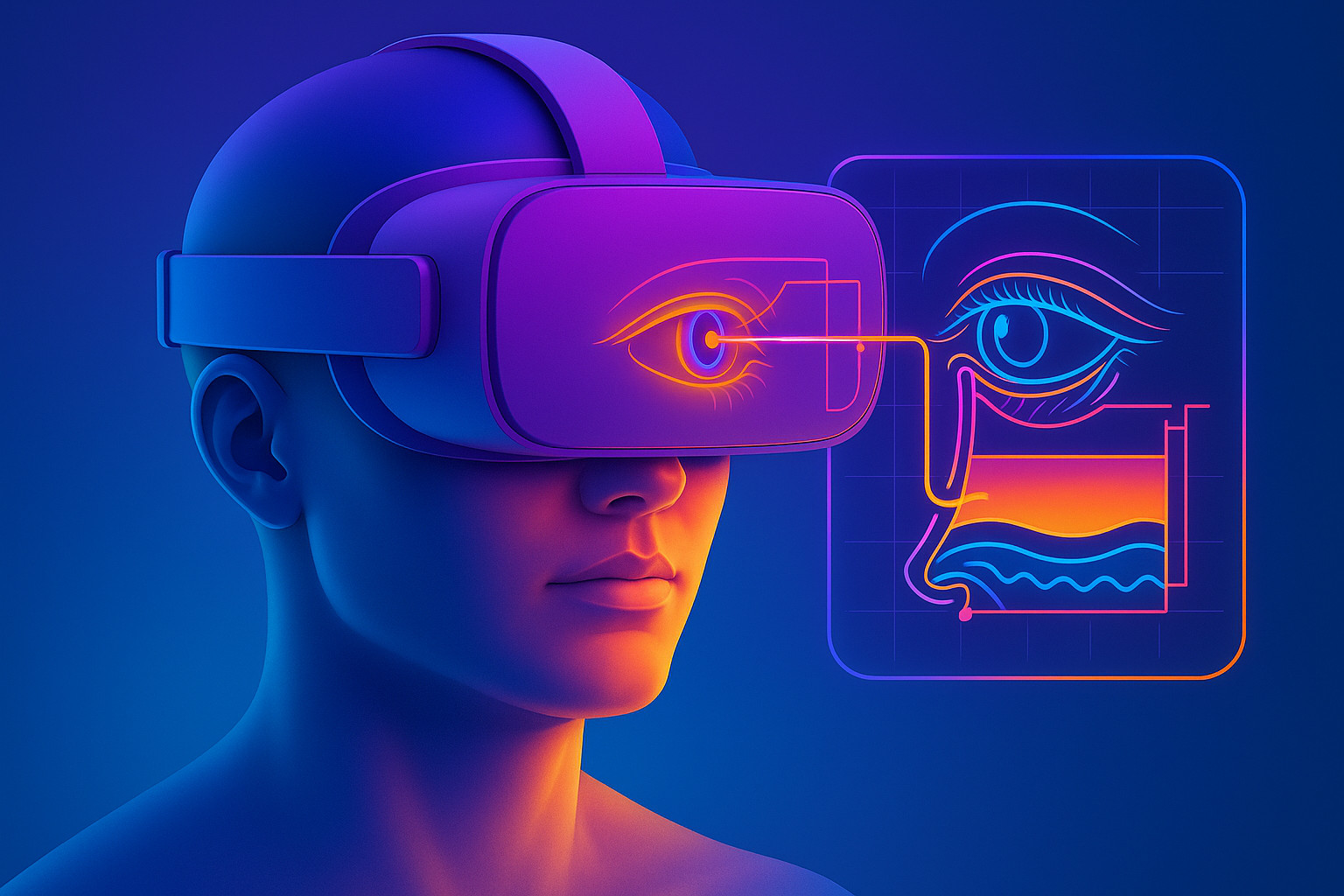
VR Headset Tear Film Examination
The problem the invention solves
The invention addresses evaluating a patient's tear film quality using controlled visual stimuli while capturing tear film samples and imagery. The patent describes using VR to provide eyecare solutions through monitoring and tracking eyes and conducting ocular evaluation.
The core features of the invention
A VR headset worn by a patient displays visual stimuli while embedded cameras capture images of the tear film before, during, and after stimuli. A probe embedded in the VR headset collects a tear film sample. A computing device compares the sample and images with a database to evaluate the patient's tear film.
The inventive step (what's new or unique)
A single method integrates VR-displayed visual stimuli with (i) in-headset tear film sample collection using an embedded probe and (ii) time-sequenced imaging using embedded cameras, followed by database comparison for evaluation.
The tangible benefits
The disclosure describes high-resolution imaging-based assessment of tear film dynamics and immediate availability of results. It describes a non-invasive, highly accurate method that generates a detailed assessment/report of tear film quality (including stability, thickness, and distribution). It is described as suitable for clinical settings and remote telemedicine applications.
The broader impact (society, sustainability, industry)
The disclosure describes enabling non-invasive tear film disorder diagnosis and monitoring using a VR platform. It also describes a centralized vision test management platform that can aggregate data and track vision health trends.
See a Product Impact Decision Brief for your own product domain.
Start free 30-day trialReduce competitive risk and uncover innovation opportunities, without adding headcount
Get early visibilitySetup takes ~3 minutes. Cancel anytime.